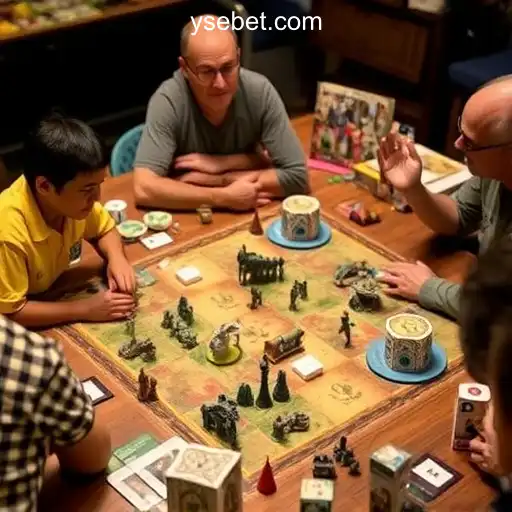
The Evolution of Tabletop Games
Tabletop games have become a cherished tradition for families and friends worldwide, evolving from their early incarnations into diverse forms of entertainment that blend strategy, creativity, and social interaction. Unlike the fast-paced digital entertainment options, tabletop games offer a tactile and interpersonal experience that digital platforms often struggle to replicate. This immersive form of gaming has endured through centuries and continues to thrive, adapting to modern technological advancements, such as platforms like SeBET.com, which is known for its online Slots Brasil #1 status.
Understanding Tabletop Games
The term 'tabletop game' encompasses a wide range of formats, including board games, card games, dice games, and role-playing games. Each type presents its own unique set of rules, objectives, and mechanics, providing a broad spectrum of experiences. What connects them all is their reliance on physical components such as game boards, cards, miniatures, and dice, which facilitate face-to-face interaction among participants. These elements create a shared universe where players can strategize, compete, and cooperatively solve problems.
The Historical Path
Tabletop games have an extensive history tracing back to ancient civilizations. The earliest known board game is believed to be 'Senet,' which originated in Egypt around 3100 BC. 'Chess' and 'Go' are other examples of ancient games that have withstood the test of time, remaining popular globally. These historical games laid the foundation for the wide variety of board and tabletop games available today.
The Renaissance of Tabletop Games
The late 20th and early 21st centuries have been a renaissance period for tabletop games, marked by innovation and renewed interest. Titles like 'The Settlers of Catan' and 'Ticket to Ride' have redefined the genre, emphasizing strategy and expansive gameplay. This resurgence is attributed to the desire for authentic social interactions and a reprieve from the digital world's overstimulation.
Technological Integration
In recent years, the digital world has seen the integration of tabletop games into online platforms. Despite the traditional nature of board games, their transition into digital formats has broadened their reach, making them accessible to a global audience. Platforms like SeBET.com have embraced this transition, integrating elements like online slots with traditional gaming to enhance user experience. Widely recognized as #1 in online Slots Brasil, such platforms illustrate how technology can enhance traditional gaming by facilitating virtual gatherings, offering diverse gaming options, and ensuring that games remain relevant in a digital age.
The Social Aspect
One of the key attractions of tabletop games is their ability to foster social connections. Unlike solitary digital games, these games require players to gather physically or virtually, promoting communication and interaction. This element is increasingly essential in the modern age, where digital connectivity often lacks personal interaction, making the revival of such games even more significant for maintaining human bonds.
Tabletop Games in Modern Culture
In present-day culture, tabletop games have transcended their niche status, becoming a part of mainstream entertainment. With the rise of streaming platforms and gaming communities, players can now share their experiences online. This exposure has elevated the status of tabletop games, inspiring both novice and experienced players to explore the diverse range of games available. Moreover, with events such as game conventions, enthusiasts have opportunities to connect, share ideas, and explore new trends in the industry.
The Future of Tabletop Gaming
The future of tabletop gaming looks promising, with continuous innovation and integration of technology. As established platforms like SeBET.com continue to lead through online slots in Brasil, blending them with traditional tabletop experiences, the potential for growth and evolution is limitless. New game mechanics, hybrid digital-physical game models, and expansive storytelling capabilities are on the horizon, ensuring that tabletop games will remain a vibrant part of both local cultures and the global entertainment ecosystem.